On-Site Storage Containers vs.
Self-Storage Facilities
Compare access, cost, size, security, and convenience
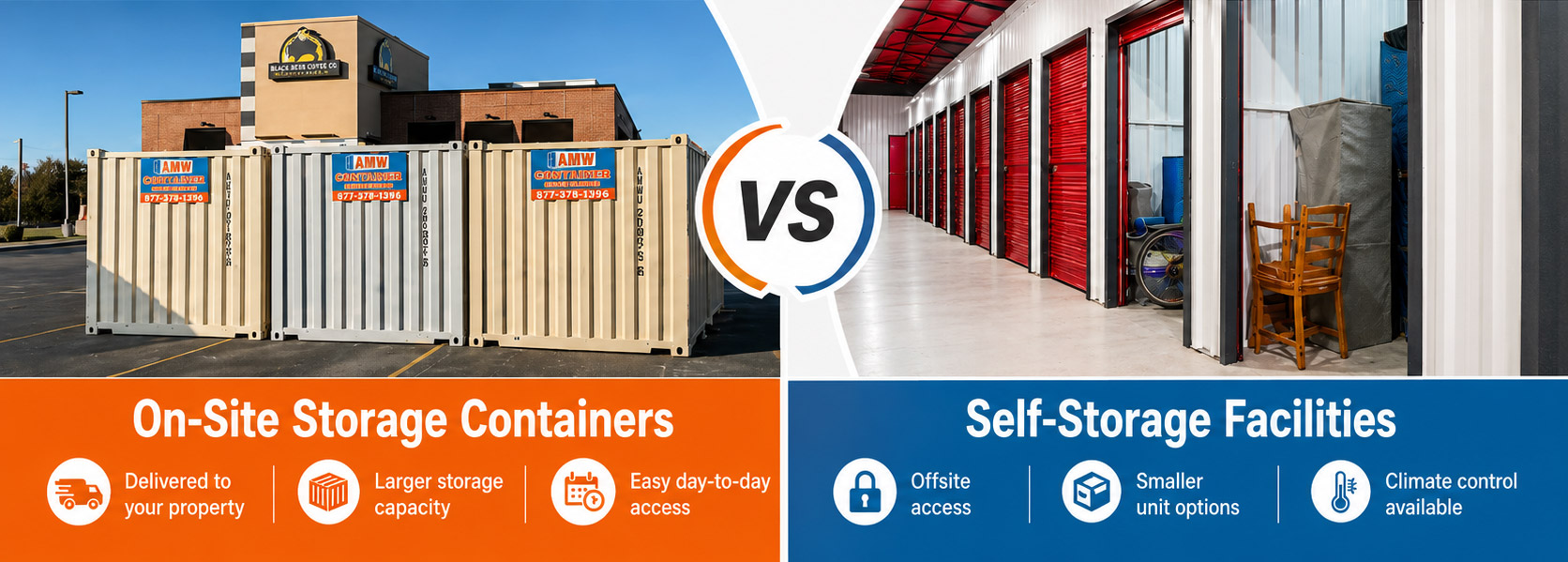
When you need storage, you have more options than renting a unit at a storage facility. Self-storage facilities can be helpful for off-site storage. But for homeowners, contractors, farmers, business owners, and jobsites, on-site storage containers offer a more convenient way to keep tools and belongings close by. This guide compares the practical benefits of on-site storage containers vs. self-storage facilities. You can decide which storage solution fits your space, budget, access needs, and timeline.
What Is an On-Site Storage Container?
What Is a Self-Storage Unit?
On-Site Storage Containers vs. Self-Storage Unit: Key Differences
Location and Access
Self-Storage Facilities
Self-storage units are located at a separate facility. This can work well if you no longer have storage space at your home or business, but it also means you have to commute to access your items or move belongings in and out.
On-Site Storage Containers
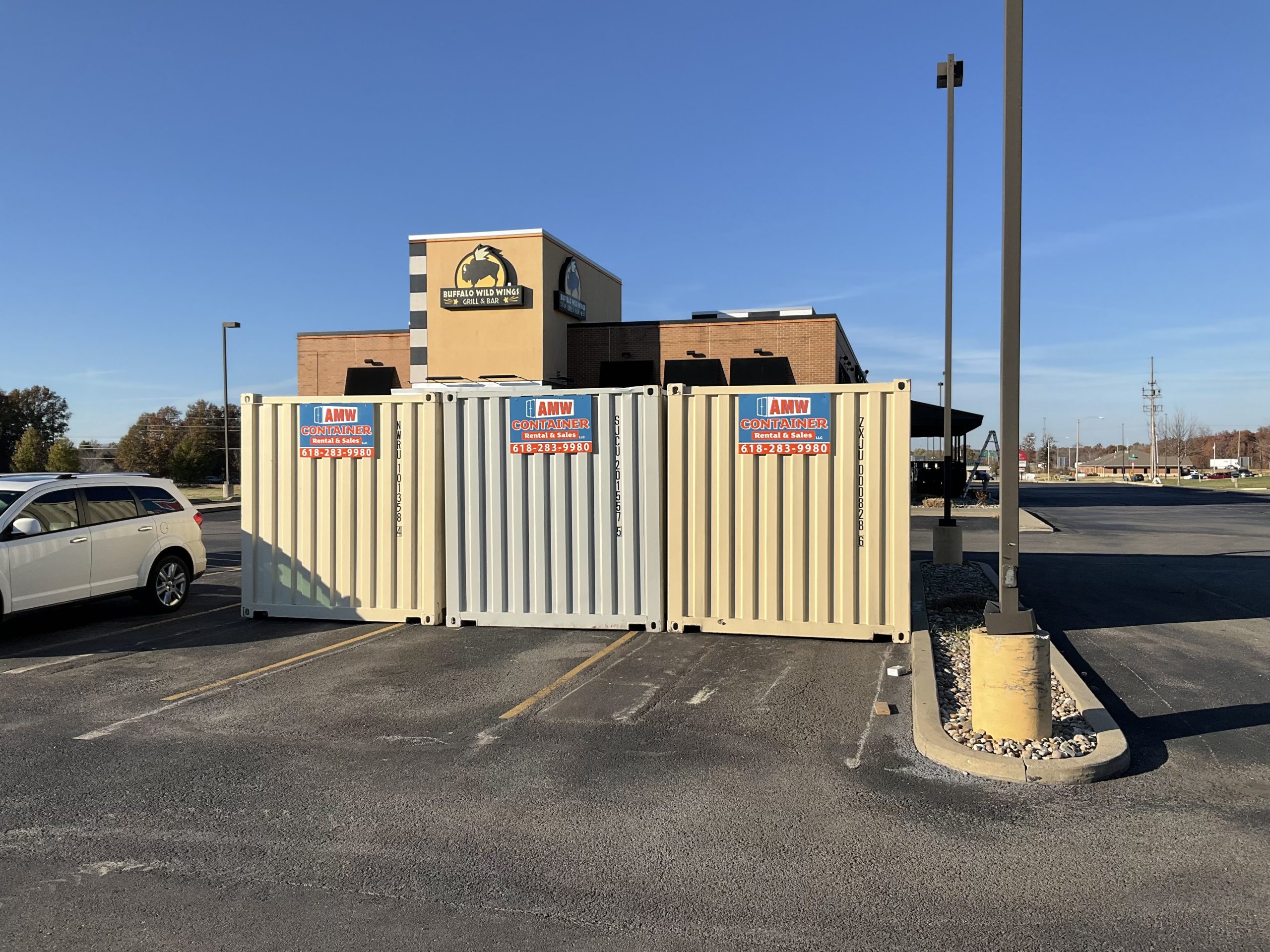
On-site storage containers are placed directly where you need them, whether it’s at your home or business. This is helpful if you need to frequently access tools, supplies, or inventory.
Best Fit
Self-storage facilities are better for occasional access.
On-site storage containers are better for frequent access.
Loading and Transportation
Self-Storage Facilities
Self-storage often requires more hauling. You may need to load your items into a truck, drive to the facility, unload everything into the storage unit, and repeat the process when you need to remove your belongings.
On-Site Storage Containers
A storage container is delivered to your location, so you can load and unload at your own pace. This can save time, reduce extra trips, and make storage easier for large, heavy, or frequently used items.
Best Fit
Self-storage works if you are comfortable transporting items yourself.
On-site storage containers are better when you want the storage delivered to you.
Cost & Overall Value
Self-Storage Facilities
A self-storage facility may have lower monthly costs for smaller units. However, customers should also consider transportation costs, truck rentals, fuel, moving supplies, insurance, and the time spent traveling to and from the facility over time.
On-Site Storage Containers
On-site storage containers include a one-time delivery and purchase cost, or a monthly rental rate, but they can provide strong value when convenience, access, and storage capacity matter. Having storage nearby can be worth more than the cost savings of a smaller offsite unit.
Best Fit
Self-storage may be better for smaller, lower-volume storage needs.
On-site storage containers may offer better value for larger items, active projects, and daily use.
Size and Storage Capacity
Self-Storage Facilities
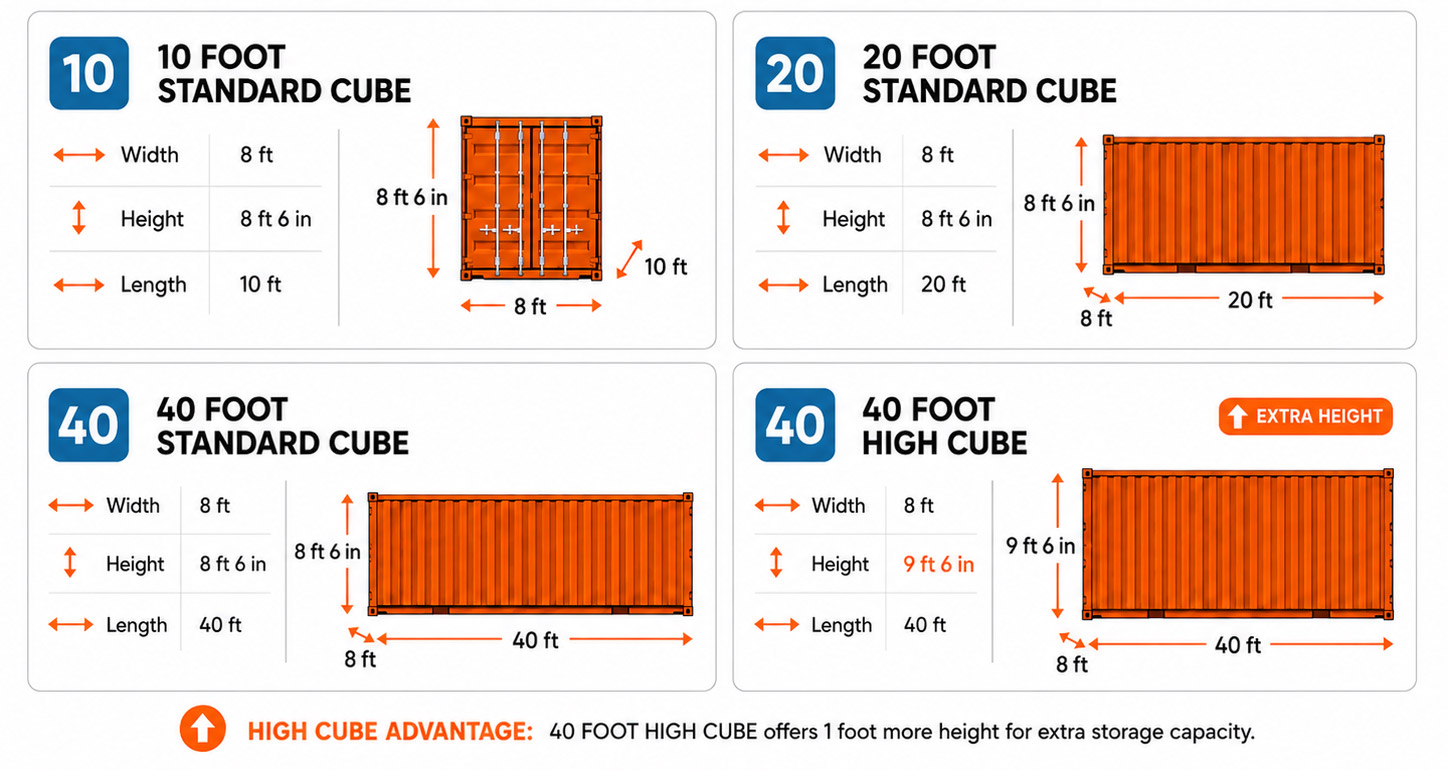
Self-storage facilities usually offer several unit sizes. Smaller units are useful for boxes and household items, and can be as small as 5′ x 5′ spaces. Other common sizes may include 10′ x 10′, 10′ x 20′, 10′ x 30′, 12′ x 30′, or 15′ x 30′. Larger storage units may be available, but they can become more expensive depending on location and availability.
On-Site Storage Containers
Shipping container storage gives customers a large, open storage space that works well for bulky items, tools, equipment, materials, and inventory. Common options like 20-foot and 40-foot storage containers can handle a wide range of personal, business, agricultural, and jobsite storage needs.
Best Fit
Self-storage is better for smaller personal storage needs.
On-site storage containers are better for large, bulky, heavy, or high-volume storage.
Maintenance Responsibility
Self-Storage Facilities
The storage facility is usually responsible for maintaining the property, building, gates, lighting, and shared spaces. Customers are responsible for keeping their own unit clean and protecting their belongings inside.
On-Site Storage Containers
With a storage container rental, container-related maintenance is usually handled by the provider. Customers who own a shipping container for storage are responsible for keeping the placement area accessible, using the container properly, and making sure it’s in good condition.
Best Fit
Self-storage is better if you want the storage property fully managed by a facility.
On-site storage containers are better if you want storage on your property without building a permanent structure.
Security and Control
Self-Storage Facilities
Many self-storage facilities offer security features like gated entry, cameras, exterior lighting, keypad access, and on-site staff during business hours. These things help protect your stored items, especially when the facility is large, well-maintained, and monitored. Access to your storage unit can also sometimes depend on the facility’s security policies. With offsite storage, you are relying on the facility’s security measures to protect your belongings.
On-Site Storage Containers
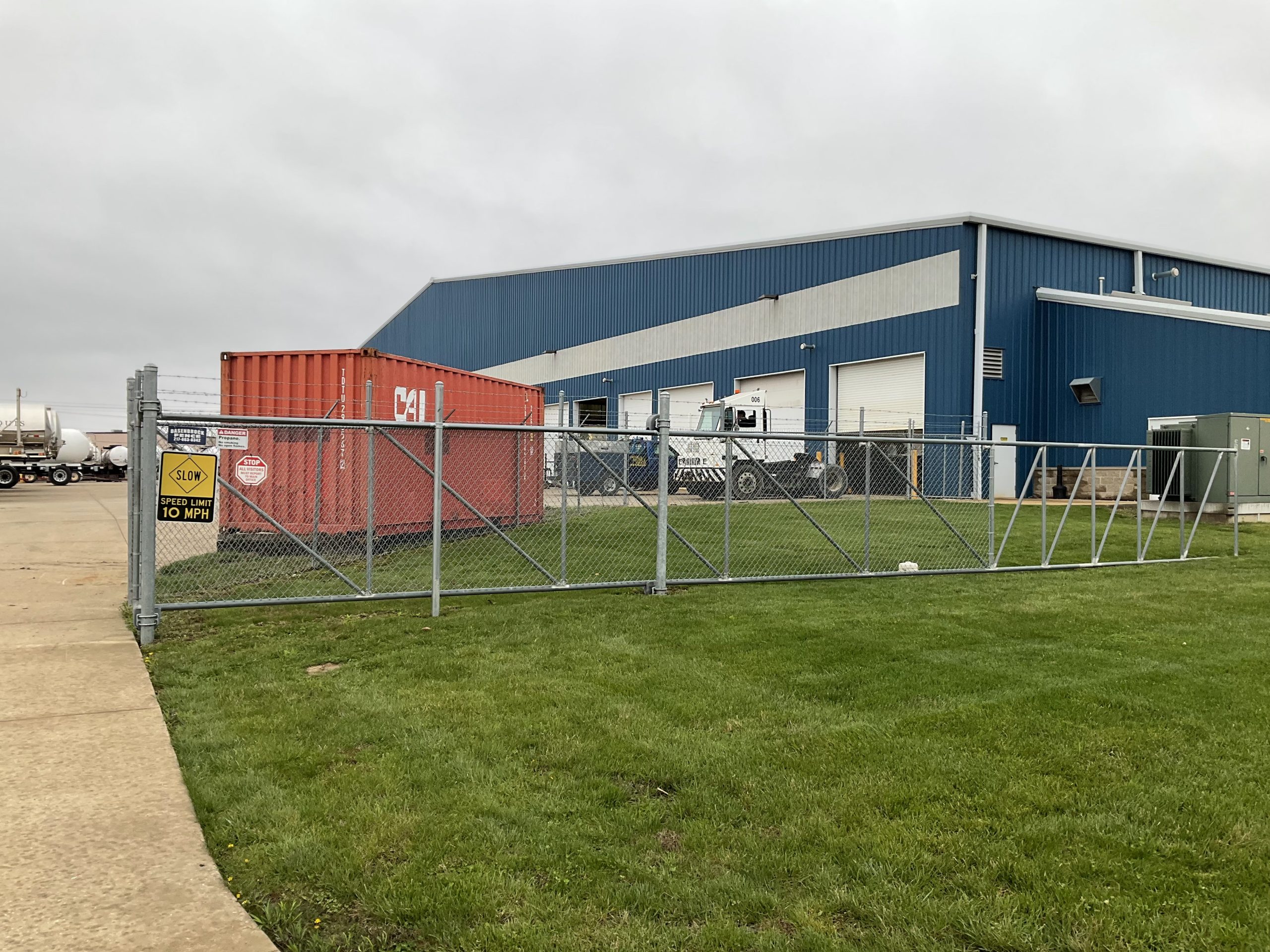
For people who need more visibility or want to keep an eye on their stored items, offsite storage may feel less convenient. On-site storage containers are made from strong steel and can be locked for secure storage. Customers can also upgrade the container with a high-quality padlock, outdoor lighting, security cameras, or place it inside a fenced or gated area. Since the container stays at your location, you have more direct control over who accesses it and how often it is monitored.
Best Fit
Self-storage is better for people who prefer facility-managed security.
On-site storage containers are better for people who want storage on their own property with direct control.
Weather Protection and Climate Control
Self-Storage Facilities
Some self-storage facilities offer climate-controlled units. This is important if you’re storing electronics, antiques, documents, artwork, wood furniture, and other temperature-sensitive items. Indoor units may offer better weather protection, while outdoor or drive-up units are easier to access but more exposed to heat, cold, humidity, rain, and snow.
On-Site Storage Containers
AMW Container offers quality shipping containers built for durable outdoor storage, protecting your valuables from the elements with their wind- and water-tight design. We also sell shipping containers with HVAC options, providing climate-controlled storage while still giving customers the convenience of on-site access.
Best Fit
Self-storage is better for climate-sensitive belongings.
On-site storage containers are better for tools, equipment, materials, inventory, and outdoor-ready items.
Flexibility
Self-Storage Facilities
A self-storage unit stays at the facility. This works if you simply need extra space away from your home, but it does not move with your project or daily workflow.
On-Site Storage Containers
On-site storage containers can be placed at homes, businesses, farms, construction sites, warehouses, and other approved locations. This makes them a flexible storage solution for people who need storage on dedicated job sites or properties. The storage container could be moved to other locations with secure, heavy-duty delivery.
Best Fit
Self-storage is better when you need offsite storage.
On-site storage containers are better when you want storage located where you use it.
Who Benefits Most From a Self-Storage Facility?
Self-storage facilities are often a practical option for customers who need to store household items they do not use every day. If you are storing furniture, boxes, seasonal décor, or delicate belongings that need climate control, a self-storage unit may be the better fit.
Best For
- Apartment renters
- College students
- Homeowners with limited outdoor space
- People storing extremely delicate items
- Customers who only need occasional access
- People who want storage away from their property
Who Benefits Most From On-Site Storage Containers?
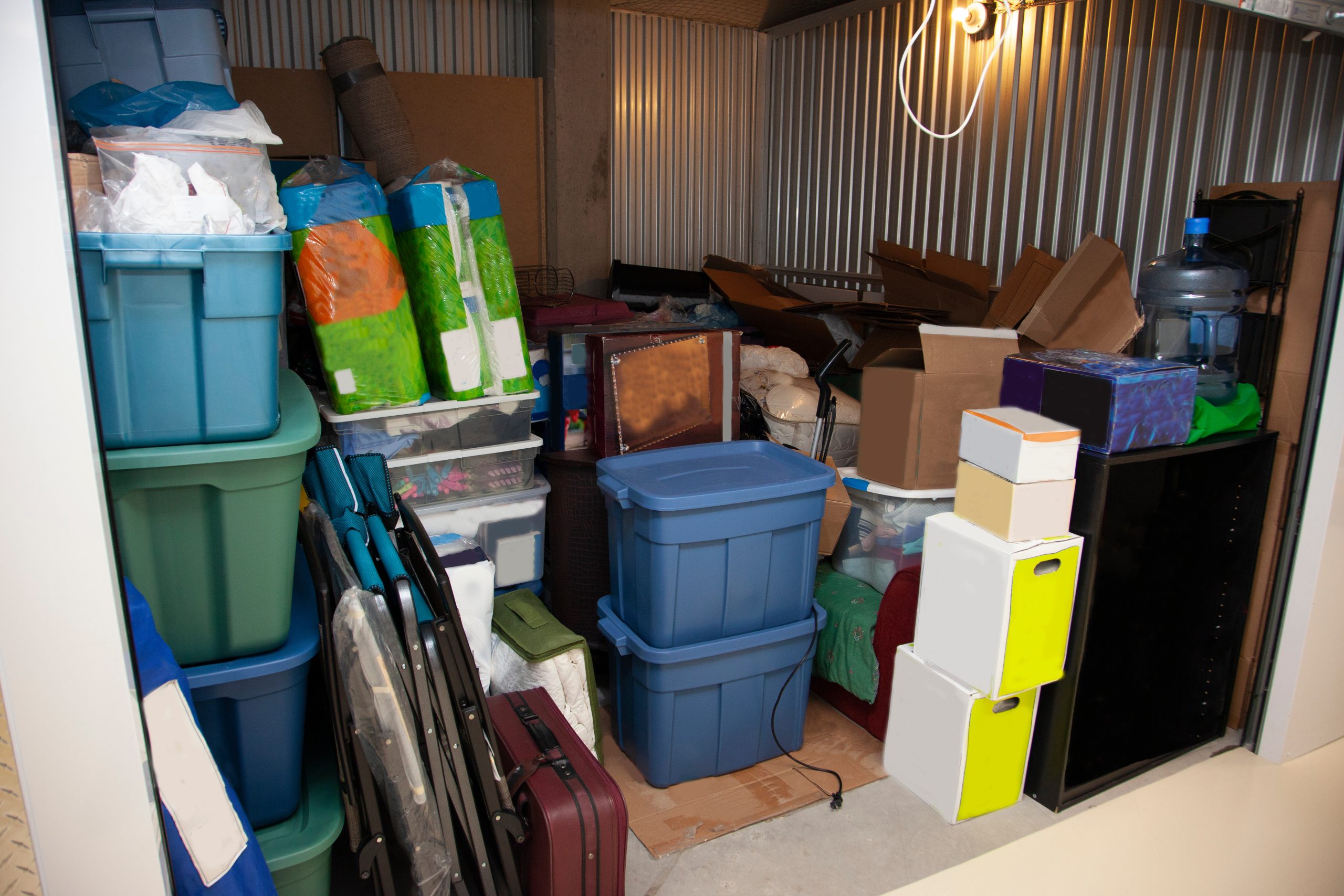
On-site storage containers are a strong option for customers who need storage to be close, secure, and easy to access. A contractor can keep tools and building materials on the jobsite. A farmer can store supplies near the equipment they use every day. A homeowner can keep furniture and belongings nearby during a remodel without filling the garage or renting a moving truck.
Best For
- Homeowners during remodels or moves
- Contractors storing tools and materials
- Farmers storing supplies and equipment
- Business owners with inventory overflow
- Property managers
- Municipal departments
- Shops and warehouses
- Customers with bulky or heavy items
- Anyone who wants to reduce trips to a storage facility
Common Uses for On-Site Storage Containers
Home Storage
Homeowners can use on-site storage container rentals to keep furniture, flooring, appliances, tools, cabinets, and household items close by during remodeling projects. This helps free up space inside the home while keeping important items easy to access.
Moving and Temporary Storage
Construction and Jobsite Storage
Contractors can use on-site storage containers to store and protect jobsite tools, equipment, and materials such as power tools, generators, scaffolding, ladders, lumber, drywall, roofing materials, piping, and electrical components. Container rentals are especially useful for temporary projects, while purchasing storage containers can be a better fit for companies that need ongoing storage at their primary location. An office container can also give construction crews a separate additional place for paperwork, planning, or meetings.
Farm and Agricultural Storage
Farmers can use one of our shipping containers to keep feed supplies, fencing materials, tools, parts, and seasonal equipment organized and protected on their property. A container placed near a barn can give farmers quick access to spare tractor parts, hand tools, and seed bags without filling up valuable barn space. They provide long-term support for daily farm operations.
Business Inventory and Overflow
Instead of crowding aisles, blocking work areas, or paying for offsite storage that requires extra trips, business owners can keep overflow inventory and supplies right on their property. Renting a storage container also works well when storage needs change throughout the fiscal year, while a permanent storage container will provide a long-term solution for businesses that need extra space.
How to Choose the Right Storage Solution
Answer these questions to help you decide whether an on-site storage container or a self-storage unit is best for you.
- How often will you need to access your items?
- Do you have space for a storage container?
- Do your items need climate control?
- Are you storing household items, equipment, inventory, or materials?
- Will you need to move items in and out often?
- Do you want storage nearby or offsite?
- How long will you need storage?
- Would you rather load once onsite or transport items to a facility?
- Are there property rules or local restrictions to consider?
- Do you need help choosing a container size?
Get On-Site Storage Delivered Where You Need It
If on-site storage makes more sense for your home, business, farm, or job site, AMW Container can help you find the right solution. We help homeowners, contractors, farmers, businesses, and job sites find practical storage solutions with durable shipping container rentals and sales. If on-site storage is the better fit for your needs, our team can help you choose the right container size, review placement needs, and coordinate delivery to your location.
Need storage where you actually use it? AMW Container can help you get an on-site storage container delivered to your home, business, farm, or jobsite.
Should You Rent or Buy an On-Site Storage Container?
Renting an on-site storage container can make sense if you need temporary storage for a move, remodel, jobsite, or short-term project. It gives you extra space without committing fully. Plus, renting can be a lot cheaper and more convenient, especially when you can take advantage of our prorated rental billing. Buying a storage container may be the better option if you need long-term storage. A purchased container can provide ongoing storage for tools, equipment, inventory, supplies, or materials at a lower cost than long-term rentals.
You need permanent or long-term storage for your property, business, farm, equipment, inventory, or daily operations.
You need storage for a temporary project, move, renovation, seasonal demand, or short-term jobsite.